SP3SP3.3: Mass movement assessment and modelling in recent ice-free areas
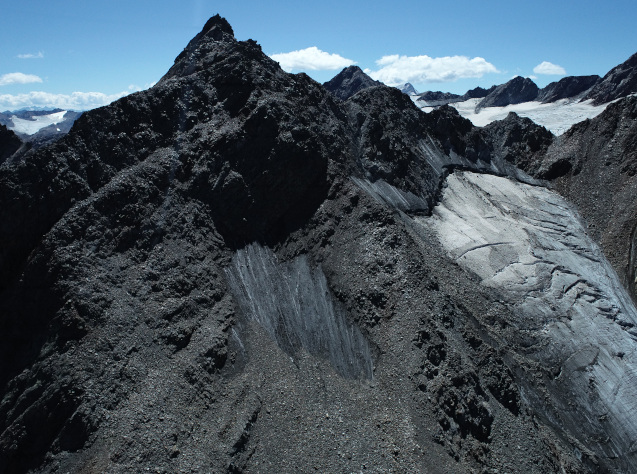
The retreat of glacier ice fundamentally changes stability of the surrounding rock and debris slopes due to the massive thermal, mechanical and hydrological change initiating massive creep and rock slope failures (Haeberli et al., 2010). Alpine and arctic polythermal glaciers develop permafrost below the upper cold-based glaciers and unfrozen rock below the warm based lower glacier parts. Glacier retreat and warming cause high rates of permafrost degradation and sometimes aggradation, sudden changes in hydro- and cryostatic pressures and fast changes in lateral ice-stresses on slopes (Krautblatter & Leith, 2015). In SP3.3, we will develop generic mechanical models that undergo rapid thermal, mechanical and hydrological change.The retreat of glacier ice fundamentally changes stability of the surrounding rock and debris slopes due to the massive thermal, mechanical and hydrological change initiating massive creep and rock slope failures (Haeberli et al., 2010). Alpine and arctic polythermal glaciers develop permafrost below the upper cold-based glaciers and unfrozen rock below the warm based lower glacier parts. Glacier retreat and warming cause high rates of permafrost degradation and sometimes aggradation, sudden changes in hydro- and cryostatic pressures and fast changes in lateral ice-stresses on slopes (Krautblatter & Leith, 2015). In SP3.3, we will develop generic mechanical models that undergo rapid thermal, mechanical and hydrological change.